
Explore Door Components
Call Frank Lumber The Door Store™: (206) 362-2311
Swing Directions
Pull the Door Towards You...

Pull the door towards you, like a refrigerator door, the side of the door the hinges are on is the Frank Lumber Swing Direction.
Pulling the door towards you and the hinges are on the right side of the door, that is a Frank Lumber Right Hand Swing.
Pulling the door towards you and the hinges are on the left side of the door, that is a Frank Lumber Left Hand Swing.
Swing Directions
Pull the Door Towards You...
Pull the door towards you, like a refrigerator door, the side of the door the hinges are on is the Frank Lumber Swing Direction.
Pulling the door towards you and the hinges are on the right side of the door, that is a Frank Lumber Right Hand Swing.
Pulling the door towards you and the hinges are on the left side of the door, that is a Frank Lumber Left Hand Swing.
Door Components and Their Descriptions
Interior Door Jambs
Applied Stop Hemlock 1

Applied Stop Hemlock 11

Clear Pine Double Rabbet

Combo Fir

Door Jambs Primed Combo

Door Jambs Primed Combo 1

Applied Stop Fir 11
Applied Stop Fir 1

Knotty Alder Double Rabbet

Mahogany Double Rabbet

Solid Fir Double Rabbet

VG Fir Veneer Double Rabbet

Interior Door Jambs
Jambs are the vertical posts that form the sides of a door frame, where the hinges are mounted, and with which the bolt interacts. They can be separated into the hinge jamb and the lock jamb.
Exterior Door Jambs

Single Rabbet Composite 1

Single Rabbet Fir Veneer 1

Single Rabbet Mahogany 1

Single Rabbet Oak 1

Single Rabbet Primed 1

Single Rabbet Solid Fir 1

Single Rabbet Solid Fir 21

Exterior Door Jambs
The difference between exterior door jambs & interior door jambs may be in the jamb widths. Older homes may have thicker exterior substrate materials & thicker plaster on the interior side. These variances can widen the jambs.
Door Sills

Inswing Adjustable Sill

Outswing Bumper Sill

Inswing Adjustable Sill

Oak Sill

Sill Pan

Wood Sill 2x8

Door Sills
A door sill is the portion of the door frame that runs along the bottom and sits directly on the foundation of your floor. It is the cross piece that actually completes the pre-installed door frame. The sill is actually underneath your threshold.
Door Astragals

Composite Astragal

Dutch/Barn Astragal

Fir Astragal

Plain T Astragal

Astragals
Double doors often require a hardware device known as an astragal. The interior or exterior astragal helps seal the gap between pairs of doors & is used to block sound or air drafts. There are two types of astragals, which help seal the space between pairs of doors. The flat astragal is used on interior double doors (i.e., entrances to a bedroom). The T-astragal is used on exterior double doors (i.e., front door entrances).
Door Weather Stripping

Weather Stripping Vinyl Foam 1

Weather Stripping

Weather Stripping White

Weatherstripping
Weatherstripping is the process of sealing door openings and blocking infiltration of outside air, keeping the inside air inside. The term can also refer to the materials used to carry out such sealing processes. The goal of weatherstripping is to prevent rain and water from entering entirely or partially and accomplishes this by either returning or rerouting water.
Threshholds & Sweeps

Adjustable Aluminum

Adjustable Aluminum 1

Adjustable Door Bottom 01

Adjustable Door Bottom 1
Adjustable Door Bottom 2

Aluminum Saddle 2
Adjustable Door Bottom 2
Aluminum Saddle 11

Door Bottom Sweep 1

Low Profile 1

Pemko Door Bottom Vinyl Insert 1

Plain Oak 1

Vinyl Door Bottom 1

Thresholds & Sweeps
The threshold of your door can be made of either wood or metal, and it is the sloped cross piece that extends across the bottom of your door area. It is slightly raised to keep water from flowing in and often is fitted with a piece of weather stripping to help insulate the area underneath your door. The threshold sits on top of the sill.
Brick Molding

Brick Molding 2 Inch Composite

Brick Molding 2 Inch Fir

Brick Molding 2 Inch Mahogany

Brick Molding 2 Inch Primed

Brick Molding
Brick molding is the exterior wooden trim that is applied on the exterior of the door unit to cover the connection point between the door frame and the wall stud where the door unit is installed. Most projects require exterior brick molding even if they have siding and not a brick facade. Applying brick molding gives a clean, finished look for your front entrance and hides the connecting point between the door unit and the wall construction.
Door Hinges
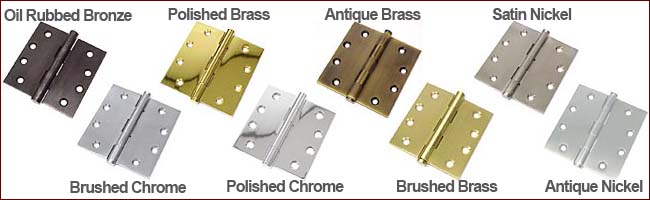
Available Hinge Finishes
Ball Bearing Hinge
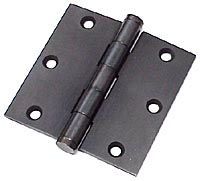
Hinges Heavy Duty
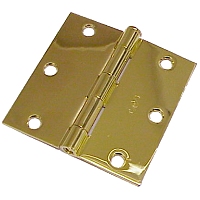
Hinges Residential
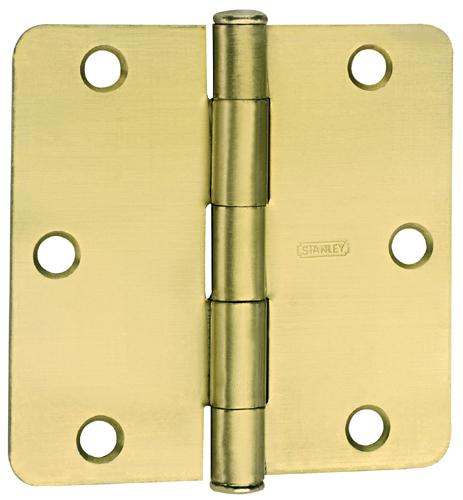
Hinges Residential 4x4
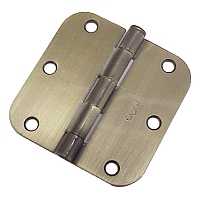
Hinges Residential Duty
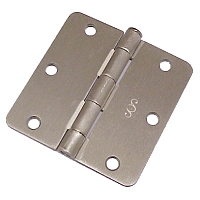
Hinges Standard Duty
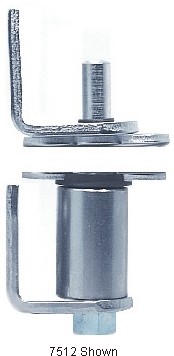
Specialty Hinges Gravity Cafe Pivot
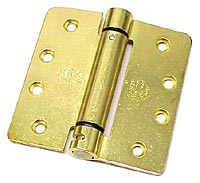
Specialty Hinges Self-closing Hinge
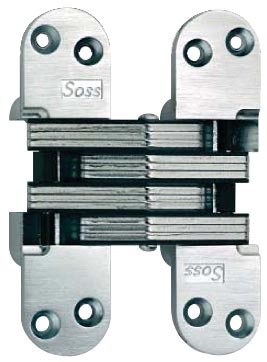
Specialty Hinges Soss Invisible Hinge
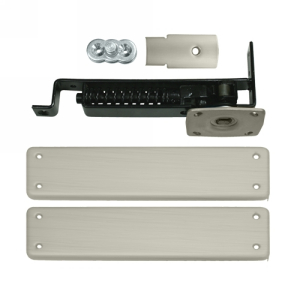
Specialty Hinges Spring Pivot Hinge

Hinges
Hinges are the hardware used to attach a door to its frame and are the pivot point for opening and closing the door. Whether you are replacing an old door or hanging a new one, hinges are an important part of the structure. They may all look somewhat similar, but there are many types of hinges for various applications. Choosing the appropriate hinge is just as important as selecting your door's knob and lockset, and Frank Lumber The Door Store™ will provide the information that you need to make the right selection.
Flush Bolts & Roller Catches

Flush Bolts Roller Catches Ball Catch

Ball Bearing Hinge

Flush Bolts Roller Catches Heavy Duty Roller Catch

Flush Bolts Roller Catches Roller Catches

Flush Bolts Roller Catches Standard Flush Bolt

Flush Bolts & Roller Catches
A roller catch or bolt is a type of door fastener that pushes a spring-loaded roller (mounted into the door) into an indented, jamb-mounted strike plate. The roller and strike plate can also be switched, where the plate is on the door and the roller is on the jamb. Typically used on doors with dummy hardware where the desired function is to push or pull the door open.
Mull Posts & Drip Caps

Drip Cap 1

Drip Cap 2

Drip Cap 3

Drip Cap 4

Mullposts Composite

Fir Mullpost

Hemlock Mullpost 1

Mull Posts & Dentil Shelves Drip Caps
A mull post or muntin is a strip of wood or metal separating and holding panes of glass in a door. A dentil shelf or drip cap is a type of flashing, often made from sheet metal, installed at the head of a door and extending to the exterior claddings. Used to divert water to the exterior or block the flow of water into the gap between the head jamb of a window or door and the wall.
Door Documents
Match Up Sheets, The Anatomy of a Door, and more!


